
.png)
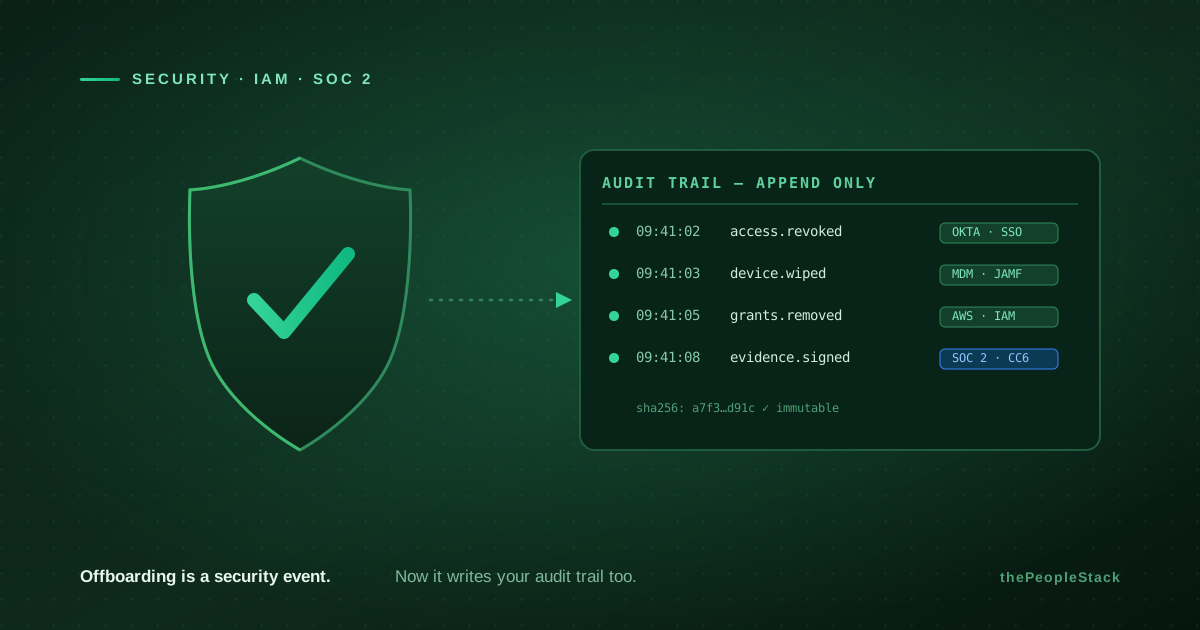
A while back we argued that offboarding isn't an HR task — it's a security event. The moment someone leaves, every hour their access stays live is a window of risk, and the companies that treat the exit as a paperwork formality are the ones that show up in breach post-mortems. That argument still holds. But something changed in 2026 that extends it, and it's worth following the thread: the same platform data that makes offboarding a security event is now also the data that proves you're secure to an auditor.
Rippling shipped Automated Compliance this year — the ability to reach SOC 2 readiness using data the platform already holds. On its surface that's a feature announcement. Underneath it's a quieter structural shift in where compliance evidence lives, and it has a specific implication for anyone who's been treating IT security and HR operations as separate departments with separate systems. They were never really separate. The audit is about to make that undeniable.
For most mid-market companies, the boundary between HR and IT security has been an accident of org charts. HR owns the employee lifecycle — who's hired, who's promoted, who's left. IT security owns access, devices, and the controls an auditor cares about. The two talk to each other through tickets and good intentions, and the seam between them is exactly where things go wrong.
That seam is where an offboarded employee keeps Slack access for three weeks because the deprovisioning ticket sat in a queue. It's where a contractor's laptop never gets wiped because nobody owned the return. It's where, at audit time, someone has to manually reconstruct proof that access reviews happened, that terminations triggered revocations within the required window, that devices were encrypted. The evidence exists, scattered across HR records and IT logs, but assembling it is a multi-week archaeology project precisely because it spans the seam.
Platforms like Rippling closed part of that seam operationally years ago. When a termination is entered in HR, the platform can immediately revoke access across synchronized applications and enforce actions on managed devices — the offboarding-as-security-event workflow we wrote about, automated. What's new in 2026 isn't the automation. It's that the record of that automation is now framed as audit evidence.
Here's the shift, stated plainly. When the platform that runs your offboarding is also the platform that attests to your access controls, the boundary between "doing the secure thing" and "proving you did the secure thing" disappears. The action and the evidence are the same record.
This is genuinely useful, and it's also a quiet accountability trap, depending entirely on one variable: whether your platform reflects reality. SOC 2 evidence drawn from platform data is only as honest as the platform's data. If your offboarding workflow is clean — terminations entered promptly, access revoked automatically, devices accounted for — then the evidence assembles itself and the audit gets dramatically lighter. If your workflow has gaps that people have been quietly papering over, those gaps don't just create security risk anymore. They become documented findings in an audit trail you're handing to a CPA firm.
That changes the stakes of operational sloppiness. In the old world, a deprovisioning ticket that sat in a queue for three weeks was a risk that mostly stayed invisible unless something bad happened. In the new world, that delay is a timestamp — a data point showing the gap between termination and revocation, sitting in the same dataset your auditor is reviewing. The platform doesn't let you tell a tidier story than your data supports. For teams that have been running tight, that's a gift. For teams that have been getting by, it's a reckoning.
The instinct is to read all of this as an IT or security responsibility. It isn't, or at least not only. The trigger for nearly every control that matters here — access granted, access revoked, role changed, employment ended — originates in an HR action. Which means the integrity of your security evidence is downstream of the discipline of your People Operations function. The auditor is, in effect, grading your offboarding hygiene.
That reframes a few things worth taking seriously. Offboarding can no longer be the task that gets done eventually, by whoever has time, after the more visible parts of an exit are handled. It's the moment that simultaneously closes your security exposure and writes your audit evidence. The same is true of the unglamorous data discipline around employment types, reporting lines, and access tiers — the stuff that's easy to let drift because nothing breaks immediately when it does. Under a model where platform data becomes audit proof, drift isn't invisible anymore. It's evidence.
The teams that will do well here are the ones that already understood offboarding as a security event and ran it accordingly. For them, Automated Compliance mostly removes a painful evidence-gathering step they were doing by hand. The teams that will struggle are the ones who've been treating the employee lifecycle as administrative box-checking — and they'll struggle not because the tooling failed them, but because the tooling finally made their actual practices legible.
If you're not certain which of those describes your organization, that uncertainty is itself the answer to investigate. Tightening the offboarding and access-lifecycle workflows that now do double duty as security controls and audit evidence is exactly the kind of IT, security, and Rippling platform work we focus on — and it's a lot cheaper to do before an audit than to explain during one.
We said offboarding was a security event. In 2026 it became a security event that also writes your audit trail. When the platform running your employee lifecycle is the same platform proving your controls to an auditor, the gap between acting securely and proving it closes — which rewards teams with clean operations and exposes teams without them. The deciding factor was never the feature. It's whether your People Operations discipline is good enough that your platform data tells a story you'd be comfortable handing to an auditor. Most teams don't know the answer until they look. Looking now, on your own terms, beats finding out during an audit.
Want to know whether your offboarding and access workflows would hold up as audit evidence today? Get in touch with our team and we'll help you find the gaps before someone else does.


December 24, 2025
Career
It's 2026, and career ladders are breaking down as flatter organizations, faster skill change, and AI reduce traditional promotion paths. Research shows high performers now grow by expanding scope, building in-demand skills, moving laterally, and earning trust through outcomes—not by waiting for titles. Employees must manage careers as portfolios of skills and impact, while PeopleOps and HR must redefine growth around scope and mobility, enable managers in leaner orgs, and ensure fair access to opportunity or risk losing top talent.
Career


November 28, 2024
Compliance
Upcoming 2025 employment law changes in the U.S. and Canada will significantly impact businesses, but Rippling’s automated compliance tools and robust HR features can help organizations stay ahead and confidently adapt to evolving regulations.
Compliance

July 11, 2026
Compliance
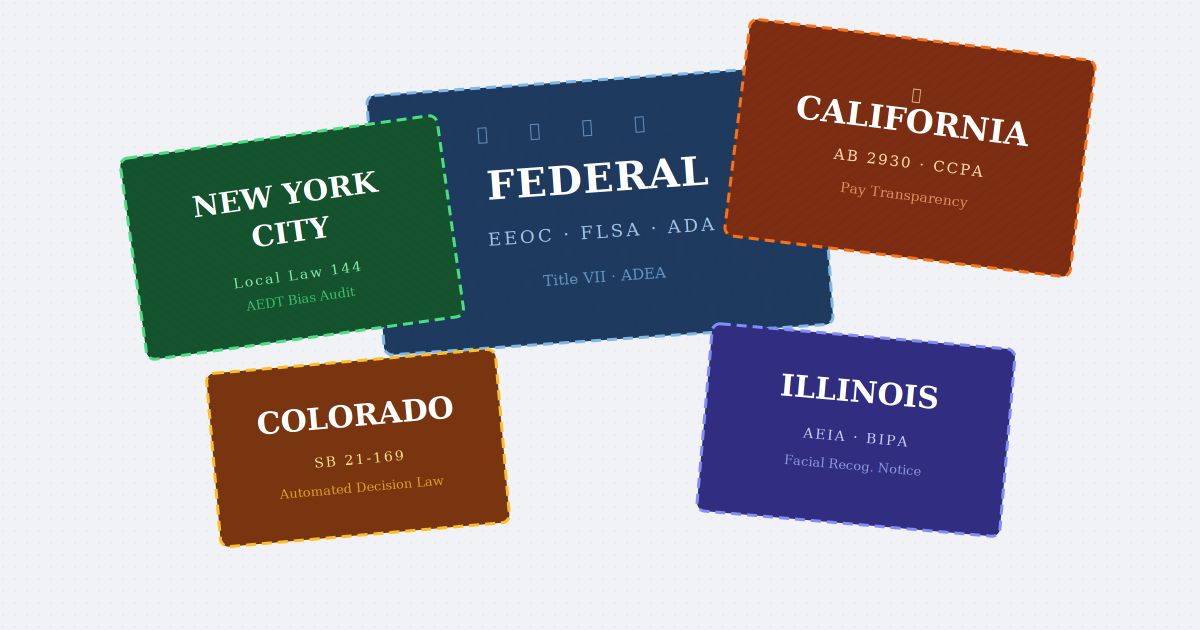
Illinois is live, Colorado lands June 30, twenty states now regulate HR data, and a federal executive order is fighting all of it. Chasing each statute is a losing game. Here's the highest-common-standard posture that holds up regardless of how the fight resolves.
Compliance