
.png)
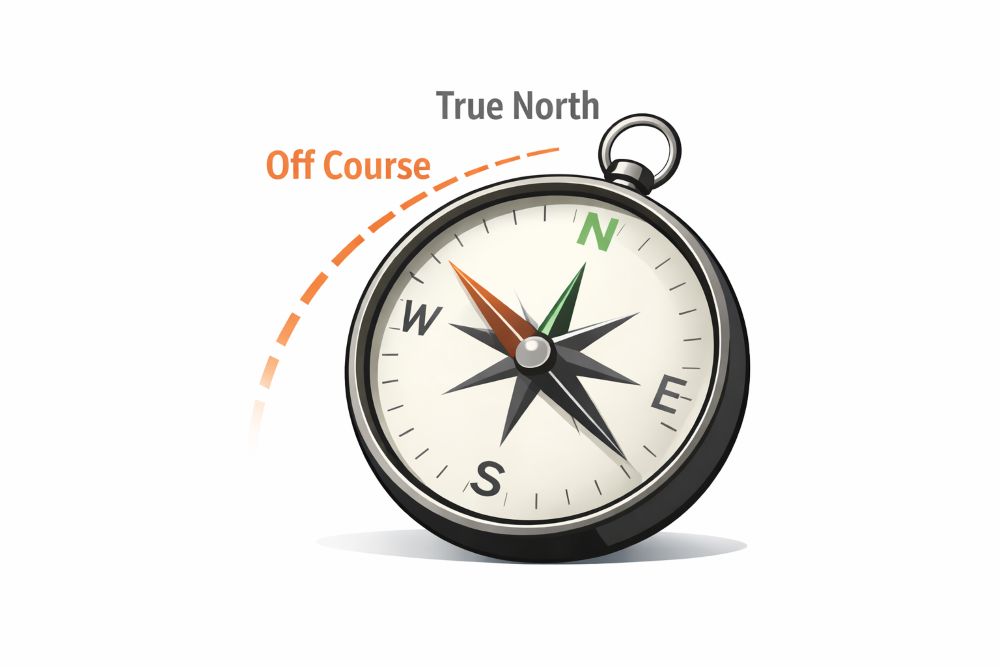
Most companies treat a Rippling implementation as a project.
It has a kickoff.
It has a go-live.
It has a sense of completion.
And then, quietly, it begins to degrade.
Twelve to eighteen months after launch, HR teams start noticing small frictions: approvals that take longer than they should, payroll exceptions creeping upward, reports that no one quite trusts, and IT processes that are still partially manual. None of it is catastrophic. All of it is expensive.
This is not a Rippling problem. It is a platform governance problem.
Modern HR systems are not static software deployments. They are living operating systems. Without deliberate, periodic review, they drift away from how the business actually operates.
That is the gap a Rippling HealthCheck is designed to close.
HR systems fail differently than finance or infrastructure systems. There is rarely a single outage or error. Instead, the cost shows up as friction, rework, and risk.
This pattern mirrors what operations research has shown for decades: processes deteriorate when ownership, feedback loops, and standards are not continuously reinforced. Harvard Business Review documented this dynamic long before modern HR tech existed in Why Process Improvements Fail, noting that even well-designed systems decay without governance.
In PeopleOps platforms, drift is driven by four predictable forces:
The platform still runs. But it no longer runs well.
A Rippling HealthCheck is not a UI walkthrough or an admin training session.
It is an operational audit that answers a simple question:
“Does our Rippling configuration still reflect how our business actually operates today?”
A proper HealthCheck examines six areas where drift creates the most cost and risk.
Workflows are the backbone of Rippling. They are also where entropy shows up first.
Over time, organizations accumulate overlapping workflows created by different admins, approvals tied to individuals instead of roles, and missing logic for geography, worker class, or job family. What once felt safe becomes slow, brittle, and opaque.
The result is predictable:
This is not just an efficiency issue. Process breakdowns are a recognized operational risk factor. The 2025 Data Breach Investigations Report from Verizon shows how missed handoffs and delayed actions contribute to real-world incidents.
Broken workflows create blind spots.
Permissions almost always drift in one of two directions:
HealthChecks routinely find managers unable to access the data they need, HR teams holding unnecessary system-wide privileges, and inconsistent access rules across entities or geographies.
This is a governance problem, not an admin problem. The U.S. National Institute of Standards and Technology makes this explicit in Guide to Attribute Based Access Control (ABAC), which explains why scalable systems rely on policy-driven, role-based access rather than individual exceptions.
When access evolves informally, trust erodes and risk compounds.
Payroll almost always runs. That does not mean it is optimized.
HealthChecks frequently surface:
The cost of this drift is measurable. EY quantified the operational and compliance impact in The Cost and Risks of Payroll Errors, showing how even small inaccuracies generate disproportionate rework and risk.
Deloitte reinforces this in Payroll in Transition, noting that standardization and automation materially reduce error rates and processing cost.
When payroll exceptions are routine, they are no longer exceptions. They are design failures.
The moment executives stop trusting reports, the HR platform stops being strategic.
HealthChecks consistently uncover:
People analytics does not start with dashboards. It starts with data discipline. The Chartered Institute of Personnel and Development emphasizes this in People Analytics Factsheet, which stresses that data quality and consistency are prerequisites for meaningful insight.
Without that foundation, reporting becomes performative.
Even organizations using Rippling for IT often fail to fully automate joiner, mover, and leaver processes.
HealthChecks commonly reveal delayed deprovisioning, unreclaimed licenses, and manual offboarding steps for edge cases.
This is not hypothetical risk. The full 2025 Data Breach Investigations Report shows how lingering access and credential misuse remain persistent breach drivers.
Identity platforms have been explicit about this exposure. Okta outlines the operational impact in What Is Provisioning and Deprovisioning?, describing lifecycle automation as a foundational control, not a convenience feature.
HealthChecks also surface a quieter problem: paying for capability without operationalizing it.
Unused modules, duplicate tools retained “just in case,” and workflow designs that increase admin overhead all erode ROI. Platform value is not realized at purchase. It is realized through intentional operating discipline.
HealthChecks deliver the most value when:
High-performing organizations treat HealthChecks as an annual operating cadence, similar to financial reviews or security assessments.
HR platforms do not stay optimized on their own.
In 2026, the companies that outperform will not be those with the most HR features. They will be the ones with the cleanest operating model behind their platform: disciplined workflows, intentional permissions, reliable payroll, and data leaders actually trust.
A Rippling HealthCheck is how you get there and how you stay there.


December 24, 2025
Career
It's 2026, and career ladders are breaking down as flatter organizations, faster skill change, and AI reduce traditional promotion paths. Research shows high performers now grow by expanding scope, building in-demand skills, moving laterally, and earning trust through outcomes—not by waiting for titles. Employees must manage careers as portfolios of skills and impact, while PeopleOps and HR must redefine growth around scope and mobility, enable managers in leaner orgs, and ensure fair access to opportunity or risk losing top talent.
Career


November 28, 2024
Compliance
Upcoming 2025 employment law changes in the U.S. and Canada will significantly impact businesses, but Rippling’s automated compliance tools and robust HR features can help organizations stay ahead and confidently adapt to evolving regulations.
Compliance


July 11, 2026
Compliance
Illinois is live, Colorado lands June 30, twenty states now regulate HR data, and a federal executive order is fighting all of it. Chasing each statute is a losing game. Here's the highest-common-standard posture that holds up regardless of how the fight resolves.
Compliance
We'd like to use cookies from Google Analytics (to understand how the site is used) and Google Ads / DoubleClick (to measure our ads). They stay off unless you accept. See our Privacy Policy.
Your browser is sending a Global Privacy Control signal, so tracking is off and we won't sell or share your information.