

Gallup found that only 14% of employees strongly agree their performance reviews inspire them to improve. That is a design failure, not a software failure. Most companies ask a single annual event to set pay, develop people, document problems, and rank talent. It does all four badly.
This post is a practical blueprint: fix the design first, then configure it properly in Rippling. If you only take one idea away, make it this one: separate the pay conversation from the development conversation.
Every performance process is quietly trying to do these at once:
These jobs pull against each other. When employees know that what they say will affect next month's raise, candor drops and managers soften hard messages. The fix is sequencing, not a better form.
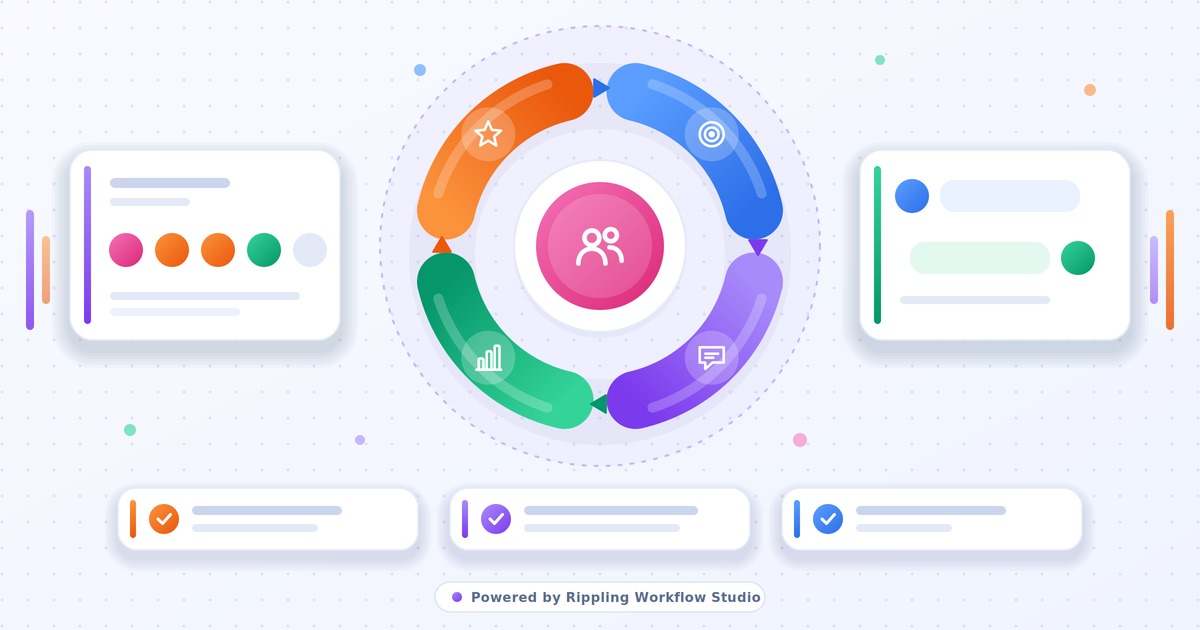
Replace the single event with four conversations, each with one job.
Set three to five goals at the start of the cycle and write down what "meets expectations" means for the role. Goals and OKRs live in the same system as the review, so progress is visible when it's time to assess.
A documented 30-minute check-in each quarter beats a once-a-year surprise. There is a perception gap to close: about 50% of managers say they give feedback weekly, while only 20% of employees agree. Scheduled check-ins close part of that gap because they don't depend on anyone remembering.
Managers calibrate ratings and settle pay outcomes first, then get briefed before any employee conversation. Nobody should learn a result at the same moment as their manager.
With pay already settled, the review conversation can focus on behavior, strengths, and next moves. End with two or three time-bound commitments, written down where both people can find them.
Vague dimensions like "teamwork" or "initiative" produce numbers that mean something different to every manager. Four changes fix most of it:
Calibration is where fair ratings are made or lost. Three rules keep it honest.
Before any names come up, agree what "meets expectations" means at your company today. Without that anchor, ratings drift toward whichever manager argues hardest.
"She's great, I'd give her a 4" is not an input. "She shipped the integration early and caught three architecture issues that saved rework" is.
The performance-potential grid is useful for succession and development conversations. It was not designed to allocate raises, and it can label people in ways that are hard to undo. Keep it out of the compensation process.
Before ratings go out, check the distribution by manager, department, and demographic group. You are not adjusting scores to hit targets. You are checking for bias before it is baked into pay and promotions.
Once the design is settled, Rippling Performance Management does the heavy lifting because it runs on the same employee data as your HRIS and payroll. These are the pieces worth configuring deliberately:
One honest caveat: Rippling runs the process you design. It will not rescue vague criteria or untrained managers. If your pay structure is still loose, start with our guide to building a compensation philosophy Rippling can enforce, so merit cycles have bands to work against.
This is the sequence we use as a starting point for mid-market teams. Adjust the timing to your fiscal calendar.
Reviews feel awful when one meeting is asked to do four jobs. Split the jobs, sequence them, calibrate on evidence, and train the managers who have to deliver the message. Then let Rippling carry the administrative load.
If you're redesigning your cycle or setting it up in Rippling, our consulting team does this work with growing companies, and a HealthCheck is the fastest way to see what your current setup can support. Get in touch to get started.



December 24, 2025
Career
It's 2026, and career ladders are breaking down as flatter organizations, faster skill change, and AI reduce traditional promotion paths. Research shows high performers now grow by expanding scope, building in-demand skills, moving laterally, and earning trust through outcomes—not by waiting for titles. Employees must manage careers as portfolios of skills and impact, while PeopleOps and HR must redefine growth around scope and mobility, enable managers in leaner orgs, and ensure fair access to opportunity or risk losing top talent.
Career


November 28, 2024
Compliance
Upcoming 2025 employment law changes in the U.S. and Canada will significantly impact businesses, but Rippling’s automated compliance tools and robust HR features can help organizations stay ahead and confidently adapt to evolving regulations.
Compliance
July 11, 2026
Compliance
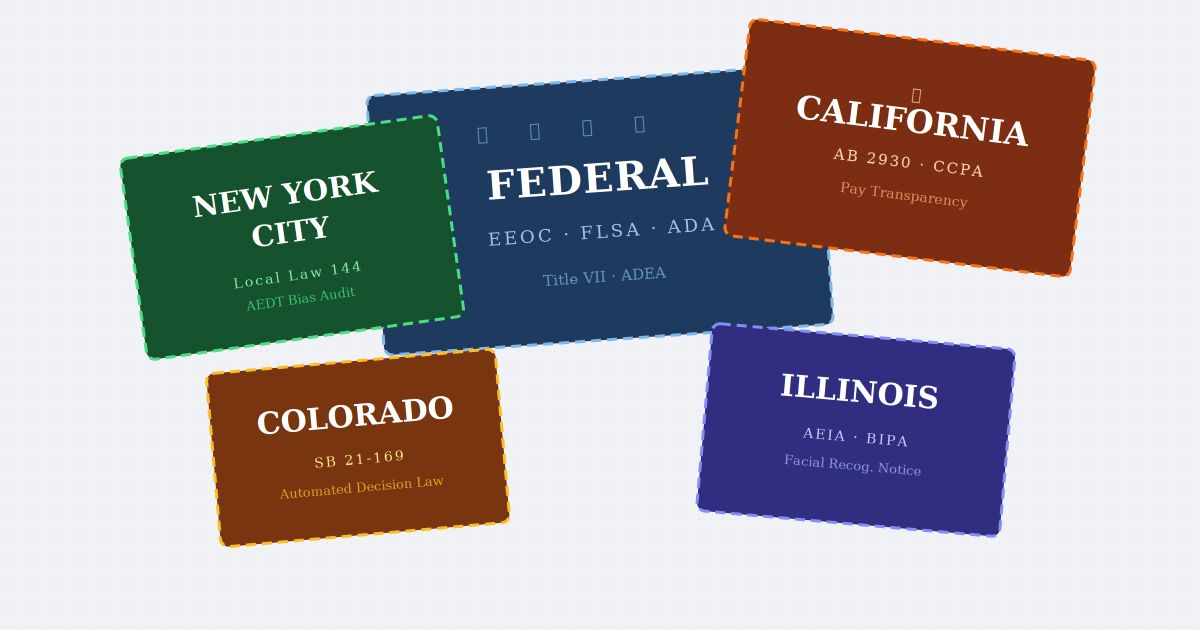
Illinois is live, Colorado lands June 30, twenty states now regulate HR data, and a federal executive order is fighting all of it. Chasing each statute is a losing game. Here's the highest-common-standard posture that holds up regardless of how the fight resolves.
Compliance
We'd like to use cookies from Google Analytics (to understand how the site is used) and Google Ads / DoubleClick (to measure our ads). They stay off unless you accept. See our Privacy Policy.
Your browser is sending a Global Privacy Control signal, so tracking is off and we won't sell or share your information.