The first Canadian hire usually happens quietly. A great candidate lives in Toronto or Vancouver, the offer goes out, and a few weeks later someone realizes the company has no way to pay them correctly. Canadian payroll isn't U.S. payroll with different tax tables. It has its own registration process, its own contributions, its own forms, and a termination document with no U.S. equivalent.
This guide covers what a U.S. company needs in place before that first paycheque, and how to configure it on Rippling. Rates and thresholds below are for 2026 and reset every January, so confirm them against current CRA figures when you set up payroll. This is general information, not tax or legal advice.
Key Takeaways
- Register before you pay. You need a CRA Business Number and a payroll program (RP) account before the first payment, plus provincial registrations where required.
- Structure is a legal decision. A Canadian entity, foreign employer registration or an EOR each carry different tax, corporate and employment law consequences.
- Quebec is a separate setup. QPP instead of CPP, QPIP premiums, a different EI rate, Revenu Québec remittances, RL-1 slips and French-language requirements all apply.
- The ROE runs on a five-day clock. Tie it to termination and leave events so a late form never delays a former employee's EI benefits.
Before the First Paycheque: Registration and Structure
Every employer paying wages in Canada needs a Business Number from the Canada Revenue Agency (CRA) and a payroll program account (an RP account) on that number before making the first payment. Depending on the province, you may also need to register with the provincial workers' compensation board and, in some provinces, for employer health tax.
The bigger decision is structure. U.S. companies typically choose between setting up a Canadian entity, registering as a foreign employer, or using an employer of record (EOR). Each has different tax, corporate, and employment law consequences, and that choice deserves advice from a Canadian accountant and employment lawyer rather than a payroll vendor. Our global hiring compliance post covers the broader considerations.
Also settle worker classification early. Canada distinguishes between employees and independent contractors and also recognizes an in-between category for dependent contractors, who are entitled to reasonable notice on termination. Calling someone a contractor doesn't make them one.
What Comes Off the Cheque: CPP, CPP2, EI, and Income Tax
Canada Pension Plan (CPP). Employees and employers each contribute 5.95% of pensionable earnings up to the 2026 yearly maximum pensionable earnings of $74,600. The maximum contribution is $4,230.45 each.
CPP2. A second, additional contribution applies on earnings between $74,600 and the 2026 second ceiling of $85,000. The rate is 4% each for employee and employer, with a maximum of $416 each.
Employment Insurance (EI). For 2026 the employee premium rate is 1.63% of insurable earnings up to $68,900, a maximum of $1,123.07. The employer pays 1.4 times the employee premium.
Income tax. Employers withhold federal and provincial income tax based on each employee's TD1 forms, one federal and one for their province or territory of employment. Collect both at onboarding. Without them, withholding defaults to basic amounts and the employee ends up over- or under-withheld.
Quebec is its own jurisdiction. Employees in Quebec contribute to the Quebec Pension Plan rather than CPP, pay Quebec Parental Insurance Plan premiums, and have a different EI rate. Source deductions go to Revenu Québec, year-end slips are RL-1s in addition to federal reporting, and French-language requirements apply to employment documents and communications. If you're hiring in Quebec, treat it as a separate setup, not a province dropdown.
Pro tip: Make both TD1 forms, federal and provincial, a required onboarding step rather than a follow-up. If they're missing, withholding falls back to basic amounts and the employee ends up over- or under-withheld.
Provincial Differences That Surprise U.S. Teams
Most of the surprises come from rules that are set by province rather than nationally.
Vacation and statutory holidays. Minimum vacation pay, public holiday entitlements, and how holiday pay is calculated all vary by province. Your U.S. PTO policy may not meet the minimum in the province where someone works.
Overtime. Thresholds and calculation methods differ, and some provinces apply daily as well as weekly triggers.
Termination. Statutory notice and severance entitlements are provincial, and common law reasonable notice can exceed the statutory minimum. This is the area where U.S.-style at-will assumptions cost companies the most. See our 2026 compliance checklist for more.
Payroll costs beyond CPP and EI. Workers' compensation premiums are set provincially, and some provinces levy employer health tax on payroll above an exemption threshold.
The Record of Employment: The Form U.S. Teams Don't Have
When an employee's earnings are interrupted by a termination, layoff, or leave such as maternity or parental leave, the employer must issue a Record of Employment (ROE). Service Canada uses it to determine the employee's EI eligibility and benefit amount.
Deadlines are strict. Generally, an ROE is due within five calendar days of the interruption of earnings, and many employers file electronically. A late or incorrect ROE doesn't just create compliance risk. It delays a former employee's income benefits, which is a fast way to damage your reputation. Build ROE issuance into your offboarding workflow and your leave process, not into someone's memory.
Key date: An ROE is generally due within five calendar days of an interruption of earnings, and that includes maternity and parental leave, not just terminations and layoffs.
Year-End: T4s, T4As, and RL-1s
By the last day of February, employers must give each employee a T4 slip and file the T4 Summary with the CRA, with the deadline moving to the next business day when it falls on a weekend. Contractors paid fees for services generally receive a T4A instead. Quebec employees also receive an RL-1.
Keep this separate from your remittance schedule. Source deductions are remitted to the CRA throughout the year, on a schedule determined by your average monthly withholding. Confusing the T4 filing deadline with the remittance deadline is a common cause of late-payment penalties.
Setting It Up on Rippling
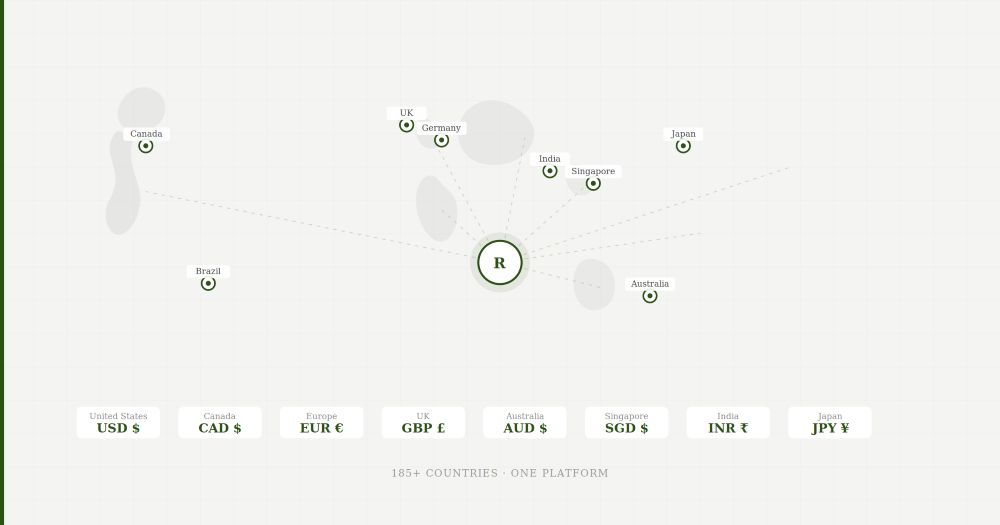
Rippling supports Canadian payroll in all provinces and territories, including Quebec, and is an authorized payroll provider with both the CRA and Revenu Québec. It handles TD1, T4, T4A, RL-1, and ROE processing, and it syncs time tracking, PTO, and statutory holidays with payroll. For a U.S. company that's the main advantage: Canadian and U.S. employees live in one system with one employee record.
A few configuration points make the difference:
Set the work location correctly. The province where someone works drives their statutory deductions, holiday calendar, and leave rules, so treat it as a required field with no defaults.
Collect the right documents at onboarding. Build a Canada-specific path in your onboarding workflow that requests the SIN and both TD1 forms before the first pay run.
Trigger ROEs automatically. Tie ROE tasks to termination and leave events so the five-day clock has an owner from day one.
Review the first pay cycle. Check the first Canadian pay run line by line against your expected CPP, EI, and tax withholding before it's final.
Mind privacy rules. Employee information about Canadians is subject to Canadian privacy law, including PIPEDA and provincial equivalents, so apply the same access discipline you'd use for any sensitive HR data.
Frequently Asked Questions
Do I need a CRA payroll account to pay an employee in Canada?
Yes. Every employer paying wages in Canada needs a Business Number from the CRA and a payroll program (RP) account before the first payment. Depending on the province, you may also need to register with the workers' compensation board and for employer health tax.
What are the CPP and EI rates for 2026?
CPP is 5.95% each for employee and employer up to $74,600, with CPP2 at 4% each on earnings between $74,600 and $85,000. The EI employee rate is 1.63% up to $68,900, and the employer pays 1.4 times the employee premium. Rates reset every January, so confirm them against current CRA figures.
When is a Record of Employment due in Canada?
Generally within five calendar days of the interruption of earnings, whether from a termination, layoff or a leave such as maternity or parental leave. A late or incorrect ROE delays the former employee's EI benefits.
Can Rippling run Canadian payroll in Quebec?
Yes. Rippling supports Canadian payroll in all provinces and territories, including Quebec, and is an authorized payroll provider with both the CRA and Revenu Québec. It handles TD1, T4, T4A, RL-1 and ROE processing.
The Bottom Line
Hiring in Canada isn't a hard problem. It's a different problem. Register before you pay, collect the right forms, respect provincial rules and Quebec's separate structure, and treat the ROE as a core process, not an afterthought. Get those right and Canadian employees become just another set of locations in your system.
If you're planning your first Canadian hire or cleaning up an existing setup, get in touch with the thePeopleStack team. Canadian payroll compliance is something we work on every day, and our Rippling expertise covers both sides of the border.

Darin prefers a (snow/surf) board and brings two decades of experience in software, HRIS deployment and people leadership to the table. He swears by the Netflix, Valve and IDEO culture manifestos. He'd rather be playing baseball in the Cactus League (or any league for that matter).